
Rhine Falls facts
The Rhine Falls are 150 m wide and 23 m high. The river drops over hard Malm limestone between Neuhausen am Rheinfall in the canton of Schaffhausen and Laufen-Uhwiesen in the canton of Zurich. A federal geotope sheet lists the falls as a landscape inventory object, number 1412.
You will often read that these are the largest waterfalls in Europe. The Rhine Falls coordination body uses that phrase for itself, while the federal geotope sheet says the largest waterfall in Central Europe. Neither claim is about height, so treat it as a description of the water volume and breadth rather than a ranking. This page covers how the falls formed, who lived beside them and what the water drove. For the current visit, see Rhine Falls tickets.
Ice age origins
How a river ended up on a limestone step.
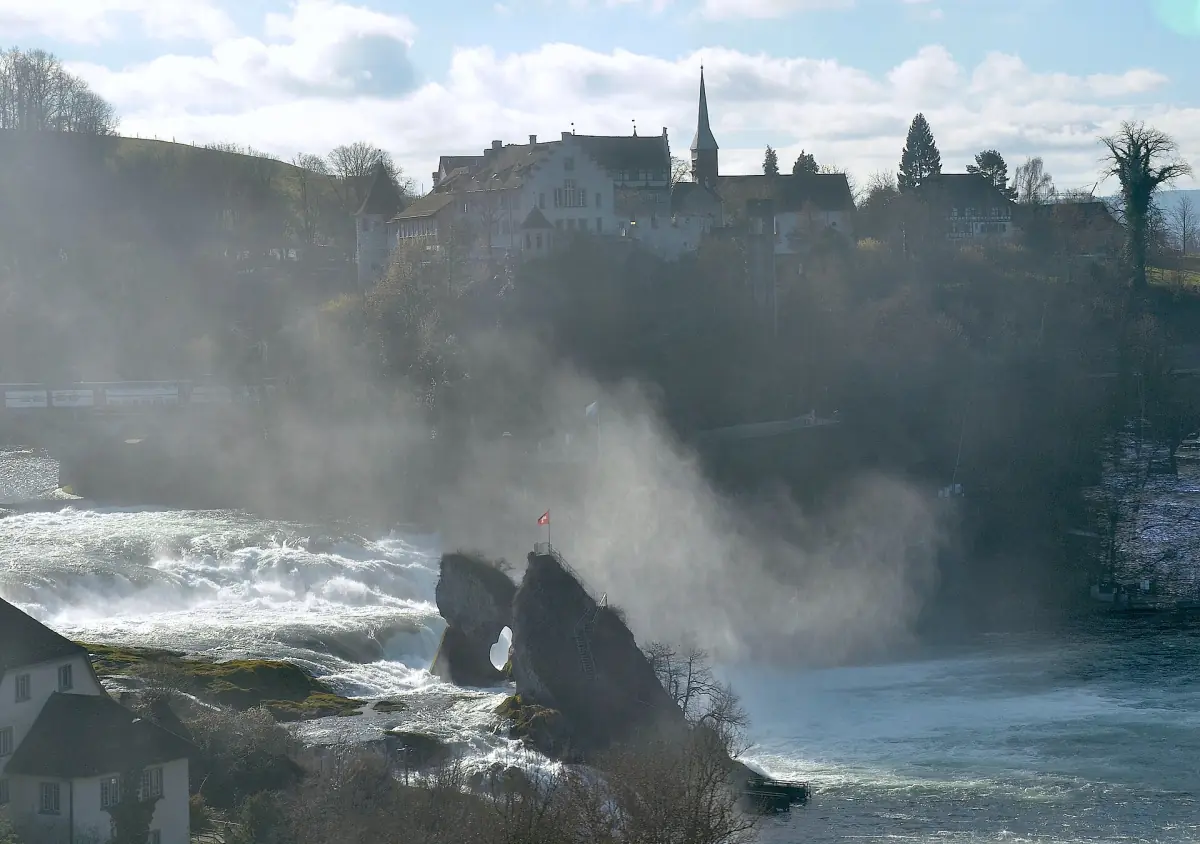
The geotope sheet describes the Rhine as shaped by ice age conditions, with its channel changing course more than once. The falls exist where the present river meets resistant Malm limestone. Softer rock around it was worn away, and the hard layer now forms the ledge and the rocks that stand in the water.
A historical lexicon article from 2010 puts the origin of the falls at about 17 000 years ago, during the last ice age. That is an older source and gives context only, so read the figure as a rough frame and not as an exact date. If you stand at the basin and see the rocks in the stream, you are looking at the part of the limestone that the river has not yet cut through.
Our pick: the standard route with a guide
This guided coach tour follows the standard route to the falls and Laufen Castle, so you see the places this history describes.
Hand-picked tours, booked through Viator. Prices are indicative starting prices in Swiss francs (as of October 2026). Tap a tour for live availability and the current price in your currency.
Rhine Falls tours with a guide
Guided trips to the Rhine Falls and Laufen Castle, with inclusions and dates for each offer.
Laufen Castle
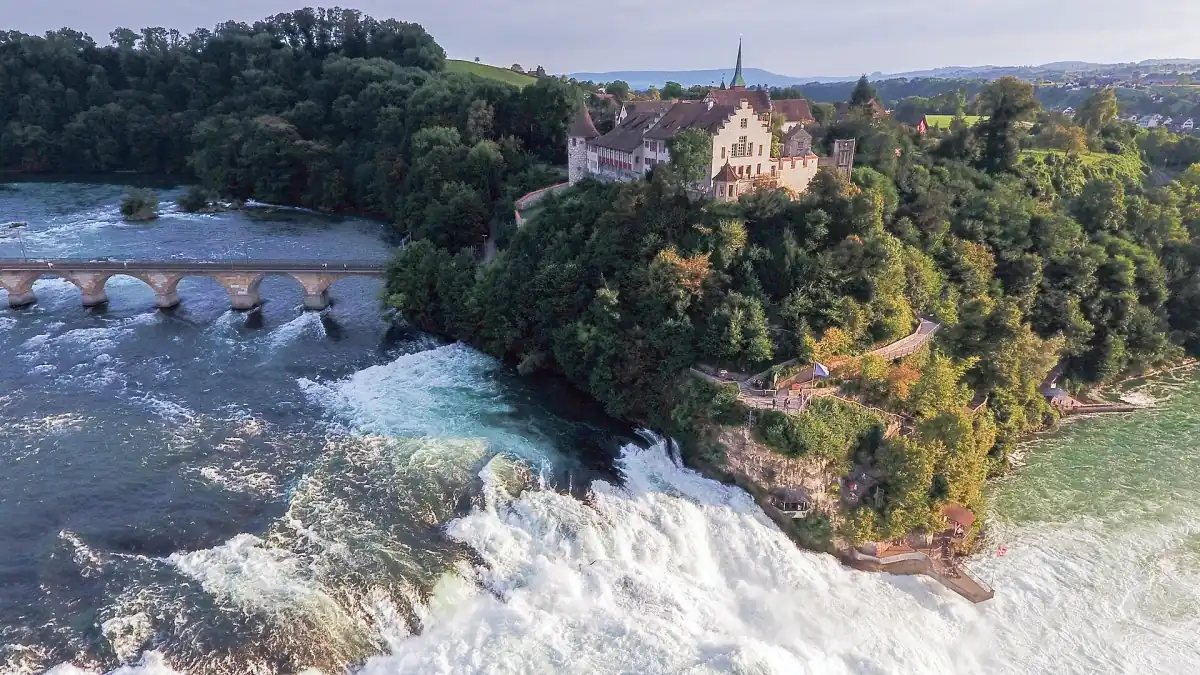
The castle above the falls on the south bank was first mentioned in 858. In 1544 it was sold to the city of Zurich. Today Schloss Laufen offers viewing platforms, a lift and a visitor centre, run by the operators. The Historama exhibition is closed for renovation until 27.11.2026.
The platforms and the practical details are covered on the Schloss Laufen page. Compare Rhine Falls tours.
Why the dates matter
Two dates frame the castle's story: a first written mention in the ninth century and a change of owner in the sixteenth. In between, the rock above the falls was a place to watch the river and the crossing. That history explains why the south bank carries a castle while the north bank, at Wörth, grew around the boats and the mills.
Industry and waterpower
What the falls drove on the north bank.
1810
Johann Georg Neher acquired an ironworks at the falls, the first step towards a metal industry beside the water.
1853
The Schweizerische Wagen Fabrik was founded, a rolling stock maker that later became SIG.
1888
The Aluminium-Industrie-Aktien-Gesellschaft was founded. Aluminium production at the site ended in 1945.
Neuhausen still uses the river for power today. The Neuhausen power station is listed at 4.4 MW. The town on the north bank is described on the Neuhausen am Rheinfall page, together with the free basin, the station and parking.
The best way to connect the history with the present is to see the falls from the water. The Rhine Falls boat tour page lists the rides from Wörth with their dates for this season.
Rhine Falls history: frequently asked questions
How wide and how high are the Rhine Falls?
The falls are 150 m wide and 23 m high. The river drops over Malm limestone on the border of the cantons of Schaffhausen and Zurich.
Are the Rhine Falls the largest waterfalls in Europe?
The Rhine Falls coordination body uses the phrase largest waterfall in Europe, while the federal geotope sheet says Central Europe. Neither refers to height, and the falls are 23 m high.
How did the Rhine Falls form?
The geotope sheet links them to ice age river channels and to hard Malm limestone over which the river falls. A 2010 lexicon article gives about 17 000 years as context.
When was Laufen Castle first mentioned?
In 858. The castle was sold to Zurich in 1544.
What industry grew up beside the falls?
An ironworks bought by Johann Georg Neher in 1810, the Schweizerische Wagen Fabrik in 1853 and an aluminium company in 1888. Aluminium production ended in 1945, and a 4.4 MW power station remains in Neuhausen.